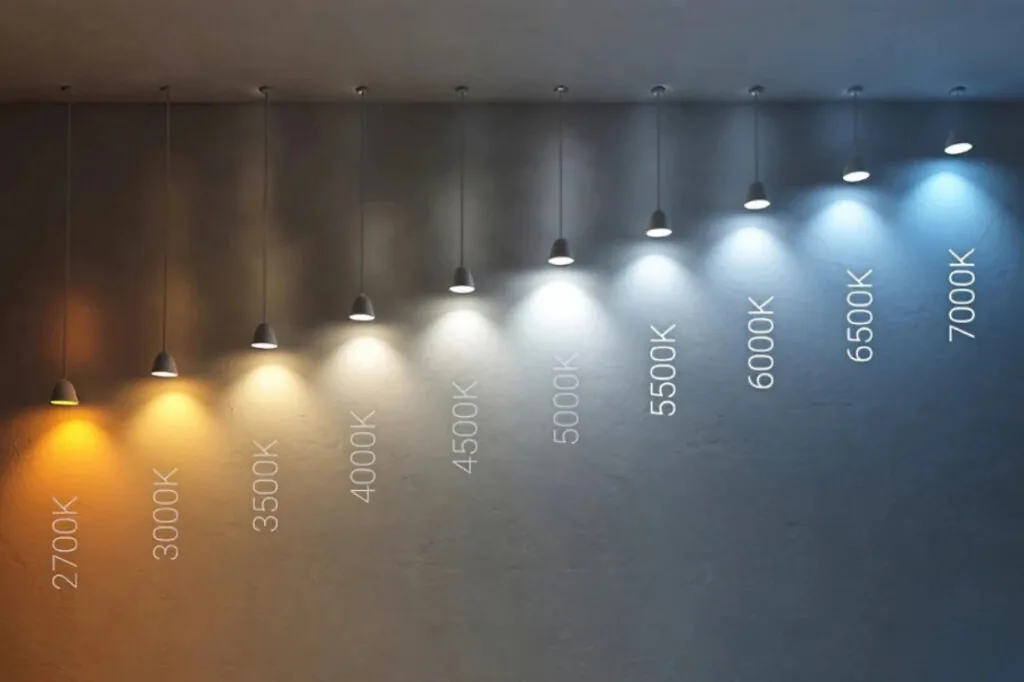
The color temperature of traditional light is measured in Kelvin (K), a unit of temperature measurement in the International System (SI) where 0 is the absolute minimum temperature and 273 K is equal to 0 degrees Celsius. For artificial lighting, we have temperature parameters that can indicate the color emitted by the light fixture, ranging from 2000K, like bright red, to 7000K, like light blue. Any value outside this range is difficult for the human eye to distinguish and can only be used in specialized rooms that are not part of the home. The wrong choice of lighting can turn a comfortable space into a cold one or, conversely, one that is too 'warm'. Below we will go over general information and details for different rooms.
General information
Normally, it is important to choose the type of lighting, whether LED, halogen, filament, etc., because each type of lighting has a different color emission, even if the same temperature is indicated on the box. We will focus on LED lighting, as it has been the most economical and popular in recent years.
For home lighting, there is a rule of three types of lighting in a space: general, ambient, and local lighting. Below are our recommendations for the temperature of these types:
- General lighting - 3000K, the general light in the house should be uniform and warm, for relaxation and socializing.
- Ambient lighting - 2300K-2700K, a light that is predominantly used for the feeling of intimacy and rest, ambient light is good to have in different places, such as a floor lamp, a table lamp, LED on curtains, etc. It is desirable that it differs in color from the general light towards a warmer color, and it itself can have different shades of red/orange.
- Local lighting - 4000K, local light exists for concentration, in areas where work or other activities are performed. The temperature of 4000K is close to pure white and helps focus and allows you to see details on objects more precisely.
Any lighting that falls outside the parameters of 2300K-4000K is either special work lighting or products that spoil the atmosphere in the house.
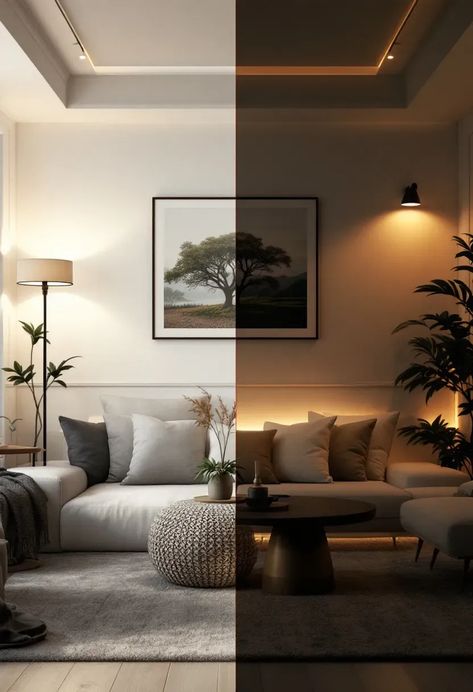
Difference between day light and warm night light in a living room
When is it necessary to use lighting outside the 2300K-4000K spectrum
However, there are situations where going outside this spectrum is not only justified but recommended for functionality, aesthetics, and comfort. Below I will indicate clear examples of when lights outside the mentioned spectrum are used.
- Activities requiring maximum concentration (5000K-6000K) - Cool light (5000K-6500K) stimulates attention and increases alertness. In spaces where intense focus is needed, a higher color temperature can be useful. Cool light mimics natural midday light, helping to perceive details more clearly and reducing eye strain during fine tasks.
- Indoor photography and filming (above 5000K) - For photo shoots or filming indoors, the light temperature is specially adjusted to avoid yellow tones or unnatural shadows.
- Wellness or therapy dedicated spaces (below 2300K or dynamic) - Some rooms are designed for deep relaxation, meditation, or light therapy.
Although the 2300K-4000K range remains the standard for home comfort, there are many situations where using lights outside this spectrum is not only useful but necessary. It all depends on the function of the room, the needs of the activities, and the desired visual effect.