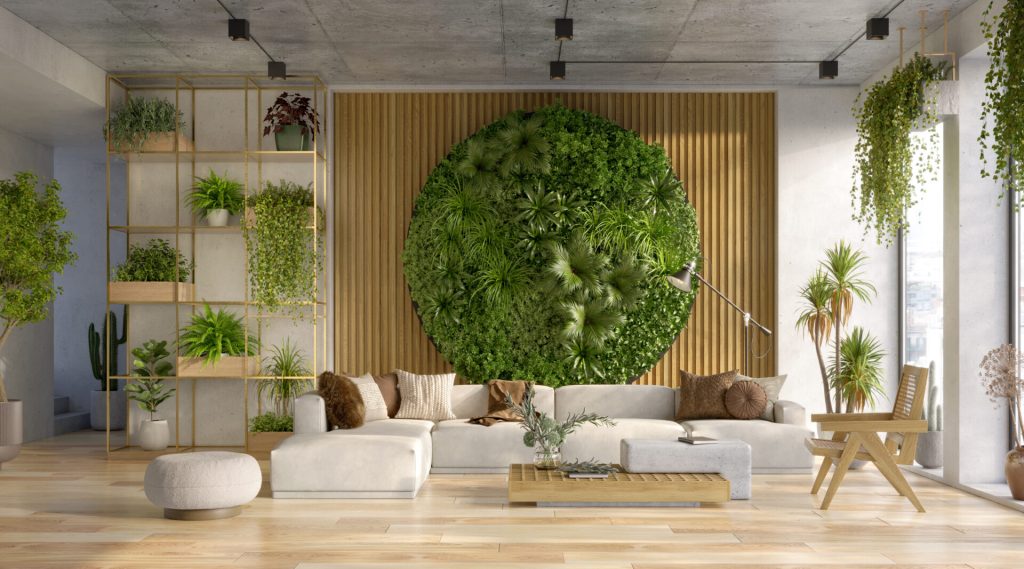
When you talk about a sustainable interior, you are not only referring to the aesthetic aspect but also to how your home environment affects the planet and your health. Eco-friendly, durable, and carefully selected materials can transform any room into a comfortable, harmonious, and responsible space. Here are five principles that we have gathered in a post to guide you.
1. Choose natural and renewable materials
A sustainable interior starts with raw materials that regenerate quickly and have a minimal footprint on ecosystems. Good examples: bamboo, wool, hemp, cork, organic cotton, FSC-certified wood. These not only look good but are also safe for health because they have a low content of toxic substances.
2. Prefer local and low-transport materials
The shorter the distance materials travel to reach you, the lower the environmental impact. By choosing local products (furniture, textiles, natural stone), you reduce carbon emissions, support the local economy, and often get more authentic and durable finishes.
3. Opt for durability, not fashion
Sustainable design means a long-term investment. Choose materials that last over time: solid wood, ceramics, stone, recycled metal, high-quality washable eco-friendly paints. It is more sustainable to buy one good piece than to replace cheap and polluting items annually.
4. Use recycled or recyclable materials
An eco interior uses resources that already have a story. Materials such as recycled glass, upcycled textiles, reclaimed wood from old constructions, or floors made from recyclable composites reduce the amount of waste and give the space character. It is also important that the materials can be easily recycled at the end of their life.
5. Avoid toxic substances and choose products with green certifications
Sustainable does not only mean ecological, but also healthy. Look for materials with low emissions of volatile organic compounds (VOCs), water-based paints and varnishes, formaldehyde-free adhesives, and products with certifications such as:
- LEED
- FSC
- Hygge/Greenguard
- OEKO-TEX Standard 100 for textiles
These guarantee cleaner indoor air and a safe environment for you and your family.
Sustainable design is not just a trend, but a responsible way to create a home that serves you while respecting the planet. By choosing natural, durable, local, and non-toxic materials, you build a beautiful, healthy interior with long-term value.